

From cow burps to data centers, it’s been a year
The opinions expressed here by Trellis expert contributors are their own, not those of Trellis.

As managing partner of At One Ventures, I get a unique and broad perspective at how the climate venture landscape is evolving. In 2025, we made progress but didn’t move in a straight line: some long-standing technical and economic constraints finally gave way, while other parts of the system showed how easily momentum can be disrupted by market demand, price volatility and policy swings. Here are some of the lows and highs of this year in climate. For corporate sustainability professionals, these are signals of what’s to come.
Lowlights
- Low lithium carbonate prices created headwinds for lithium battery recycling, meaning only the teams with the absolute best recycling economics can continue to compete. This drove some notable pivots and threatened to have us lose momentum in a capability we will ultimately need.
- Large, arbitrary tariffs were and are terrible for U.S. manufacturing. Efforts located in the U.S. were significantly harmed by chaotic trade policy. Elected officials showing almost no ability to push back to harmful policies. This is how you lose an economic race.
- As we approach near-perfect deepfakes, we’re entering a world where any narrative can be spoofed, adding jet fuel to an environment already rife with dangerous misinformation. Media consolidation into fewer hands that are acting progressively more carelessly to meet the 24-hour news cycle means we will be making stupid decisions faster.
- It was 36 degrees Fahrenheit hotter than historical highs in the arctic in February, and we had record heat wave 122 degrees Fahrenheit in South Asia in April, which put it on the verge of a major wet bulb fatality event. This event did lead to major productivity losses in the mango crop, an early example of how extreme temperatures disrupt stomata function — a mechanism that could drive major losses in the future.
- Bill Gates suggested that maybe climate change won’t be so bad, and we should focus on adaptation. While adaptation will absolutely be needed, this is no way to be a leader, and it will likely have some negative reverberations in the market. That said, the physics of planetary atmospheres marches on regardless of what people write or believe. It is not a field of study that is decided by passing comments from billionaires, a fact the media seems to keep forgetting based on where the coverage is focused.
The lowlights of 2025 point less to failure than to fragility. The warning here is that many capabilities we will depend on, such as battery recycling, resilient supply chains, trustworthy information systems and heat-tolerant agricultural and labor practices, are being treated as optional when short-term economics or political noise turn unfavorable.
Commodity price swings, trade volatility and media distortion can thwart short-term progress, but the real physical and operational needs don’t disappear when markets wobble. Letting critical sectors lapse because prices are temporarily low is not prudence; it is deferred risk. The task now is to design strategies that assume volatility rather than being derailed by it, and to invest in capabilities that remain necessary regardless of sentiment, cycles or headlines.
Highlights
In 2025, we were able to experimentally verify that by using asparagopsis seaweed as a feed additive, we can dramatically reduce the amount of methane a cow generates (90 to 95 percent), while substantially improving the feed conversion ratio. This means that the global reduction in enteric methane could be an actively profitable activity instead of one that needs to be regulated into practice.
- 2025 also saw geothermal nearing a new phase, with oil and gas majors building real expertise on how their subsurface operational skills can be used to unlock a new generation of geothermal baseload. This is in no small part due to startups that are helping to prospect and secure promising sites in less time and higher success probability.
- On the mobility front, BYD pulled ahead of Tesla as the largest global EV maker and is building an EV megafactory larger than the city of San Francisco. Waymo made big inroads into American cities, and real self-driving is about to transform much of mobility and transportation and supply chain infrastructure in the next decade.
- Data center build-outs created a mini climatetech ecosystem that supported investments in lower-power chips, decarbonized baseload, and storage for backup and generation intermittency. All the capital going into new generation and better power infrastructure should ultimately ramp U.S. ability to build, as well as lowering energy costs in the long run.
- Related to the data center construction boom, fission and fusion efforts received massive funding in 2025, with the reopening of a decommissioned part of Three Mile Island coming back online. While fusion efforts will challenge the classic 10-year venture fund life, substantial investment from U.S. private sector and Chinese public sector suggest that we will at least make significant advances in this cycle, regardless whether we crack the code on financeable facility-level gain.
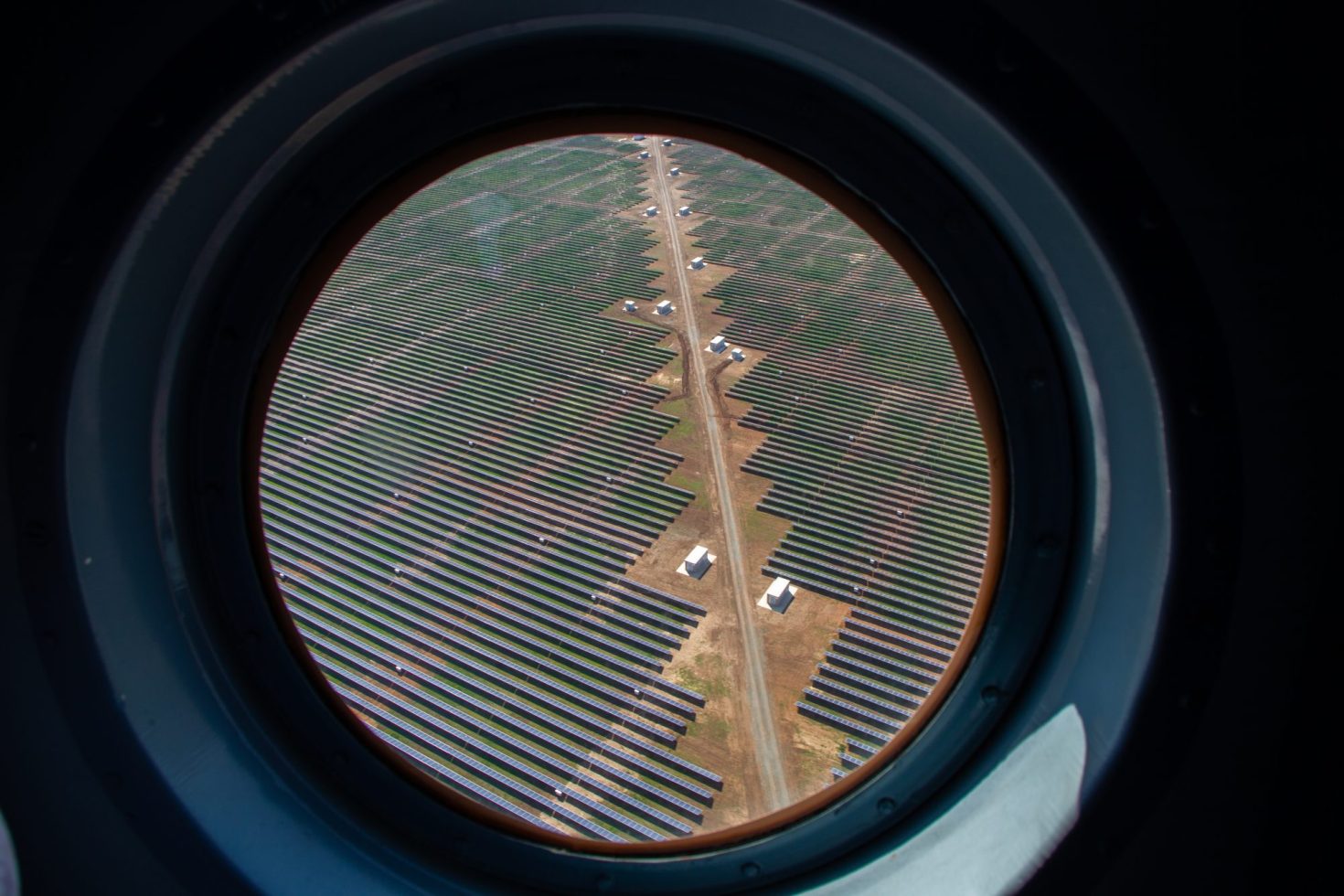
- Total generation from renewables surpassed generation from coal for the first time in modern history in the first half of 2025 — a huge milestone, for which there is no reason to reverse (unless society collapses to the point where we can’t produce panels and wind turbines).
Even in a year marked by slower capital flows, 2025 made clear that the underlying machinery of climate progress is still turning and there is amazing work being done. Methane abatement that pays for itself, baseload clean power that looks operationally familiar, autonomous mobility that is moving from novelty to infrastructure, and energy systems scaling to meet demand all point to where cost, reliability and emissions reduction are beginning to align.
This is the moment to translate awareness into preparedness: reassessing supply chains; facilities; logistics; and workforce mobility with these shifts in mind. Every business moves people, goods or electrons. The companies that start planning now, before these technologies are fully mainstream, will have more options, lower transition risk and a clearer path through the next cycle.
The post From cow burps to data centers, it’s been a year appeared first on Trellis.


Post a comment
You must be logged in to post a comment.