

How autonomous vehicles can move EV policy forward
The opinions expressed here by Trellis expert contributors are their own, not those of Trellis or its editors.
Autonomous vehicles, or AVs, are ushering in a new era of mobility in cities across the country. If you’ve used a driverless taxi in a big congested city like New York or San Francisco, you’ll know that they’re convenient and reasonably priced — plus they promise to be safer than human drivers and reduce crashes, one of the leading causes of accidental death in the U.S.
Nearly all the AVs on our roads are electric. Although AVs remain a tiny fraction of the vehicles on the road, they represent an important part of the future of low-carbon urban transport — and they can help support the broader shift toward cleaner, more advanced and affordable transportation.
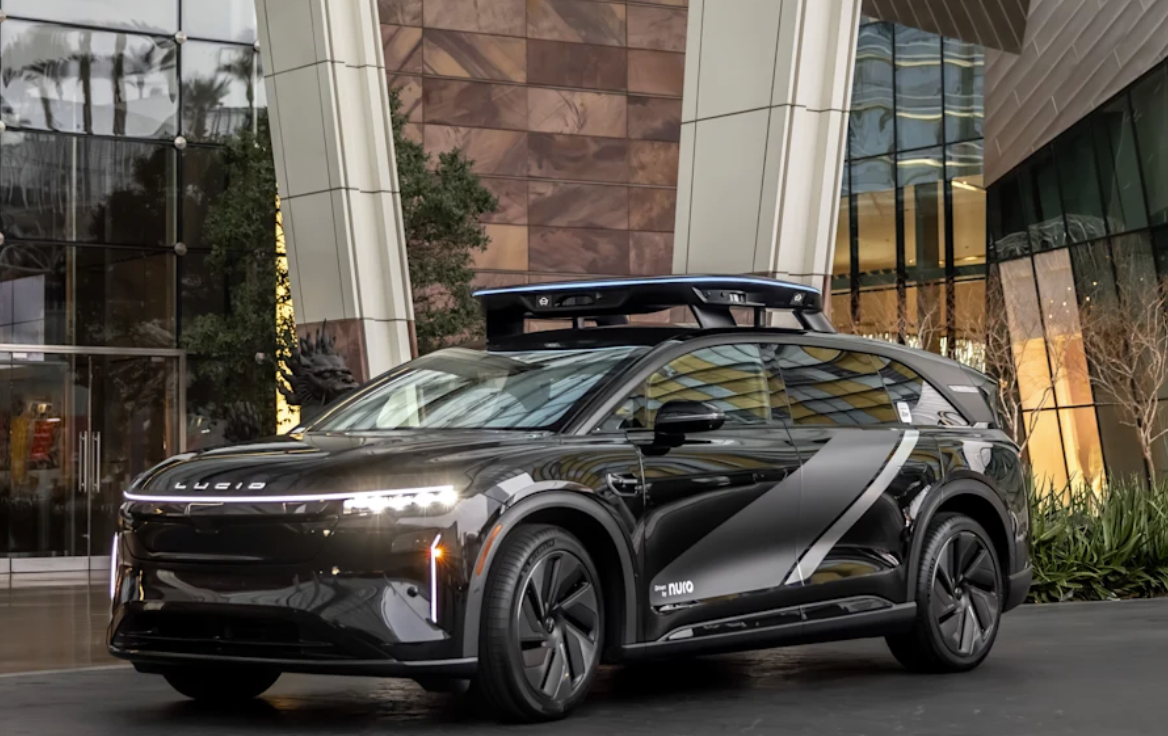
Newark, Calif.-based EV manufacturer Lucid, for example, is advancing both consumer and commercial autonomous cars, including a newly announced robotaxi partnership with Uber and Nuro slated to launch in the San Francisco Bay Area in late 2026. It has also been an important partner for Ceres in making the case on Capitol Hill that AVs and EVs will advance the American economy together.
Making the business case
That linkage further underscores that the business case for electrifying transportation remains strong, even amid recent federal policy headwinds.
Innovation, safety and efficiency can move forward together, reinforcing the long‑term shift toward electrification without relying on government mandates.
But right now, there’s no national policy framework governing autonomous vehicle deployment. AV manufacturers and operators are navigating a patchwork of inconsistent state and local rules. This fragmentation can raise costs, slow deployment and create uncertainty for AV manufacturers and developers investing in electric and automated vehicle technologies.
That dynamic ultimately hurts the larger EV industry because autonomous cars could be a huge catalyst for electrification if they are deployed with clear, uniform rules more widely.
Electric robotaxis make perfect sense because they’re fleet vehicles that can be charged at a central location when they’re not in use. They’ll be cheaper to operate over the long term as self-driving technology matures, because they can rely on relatively steady electricity prices, rather than volatile global oil markets. It’s cheaper to fuel up an EV than a gas-powered car, even though electricity rates are generally on the rise.
Goldman Sachs projects AVs will make up 8 percent of the rideshare market by 2030. That’s still small, but the growth would be significant, to 35,000 AVs on the road from around 1,500 today. It’s also a huge number of vehicle trips, given that millions of Americans use rideshare services. A national framework is the best way to make sure that the growth trajectory continues and that electric AVs keep displacing pollution on the roads.
There’s a bipartisan opportunity here as Congress considers a major bill to revamp highway and transportation programs. Including a national framework for self-driving cars in that legislation would advance both AVs and EVs.
Countering China
This policy appeals to both Republicans and Democrats: It’s a way to strengthen U.S. technological leadership, support domestic manufacturing and ensure that American companies remain competitive with rivals in China who face fewer restrictions on deployment.
China is increasingly dominating international EV markets, but the U.S. remains ahead of the curve in self-driving technology. The U.S. can’t cede its technological advantage here. In the current political environment, the fact that putting more AVs on the road will reduce pollution is almost a side-benefit.
The federal EV tax credit is gone, and the policy solutions for electrifying transportation today have dwindled in the last few years.
But Lucid is a clear example of the direction the auto industry is headed, as it shows to lawmakers through its support for Ceres’ advocacy work in D.C.
Advancing AV policy does not require compromising on safety. Given its resources, the federal government has an important role to play in ensuring AVs remain the safest vehicles on the road.
And the technology is advancing fast. The partnership with Uber, for example, will take advantage of Lucid’s fully redundant zonal architecture — a way to string wiring around an EV more efficiently — which was designed to support AV applications.
The company also offers a comprehensive suite of sensors, including LiDAR, radar, visible-light and surround-view cameras, an infrared driver monitoring camera, and ultrasonic sensors.
That all adds up to an incredibly safe roster of vehicles, and it’s a leading example of how America’s EV industry is setting the stage for a safer, cleaner transportation future.
Lucid is focused on moving the industry forward by championing innovation that delivers real-world results. Enlisting more companies to take action will build bipartisan engagement, leading to federal policy that will accelerate the EV revolution.
The post How autonomous vehicles can move EV policy forward appeared first on Trellis.


Post a comment
You must be logged in to post a comment.